-
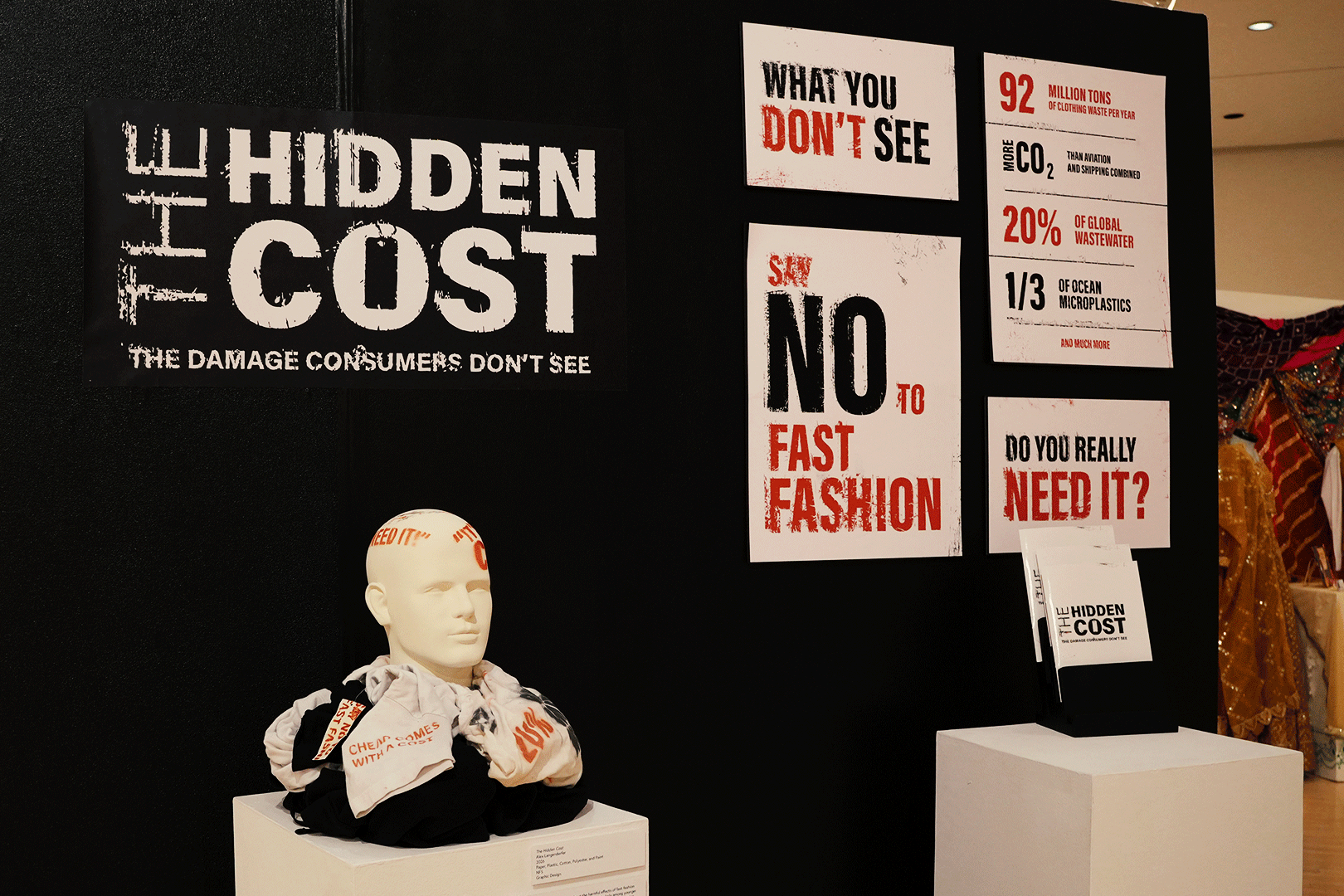
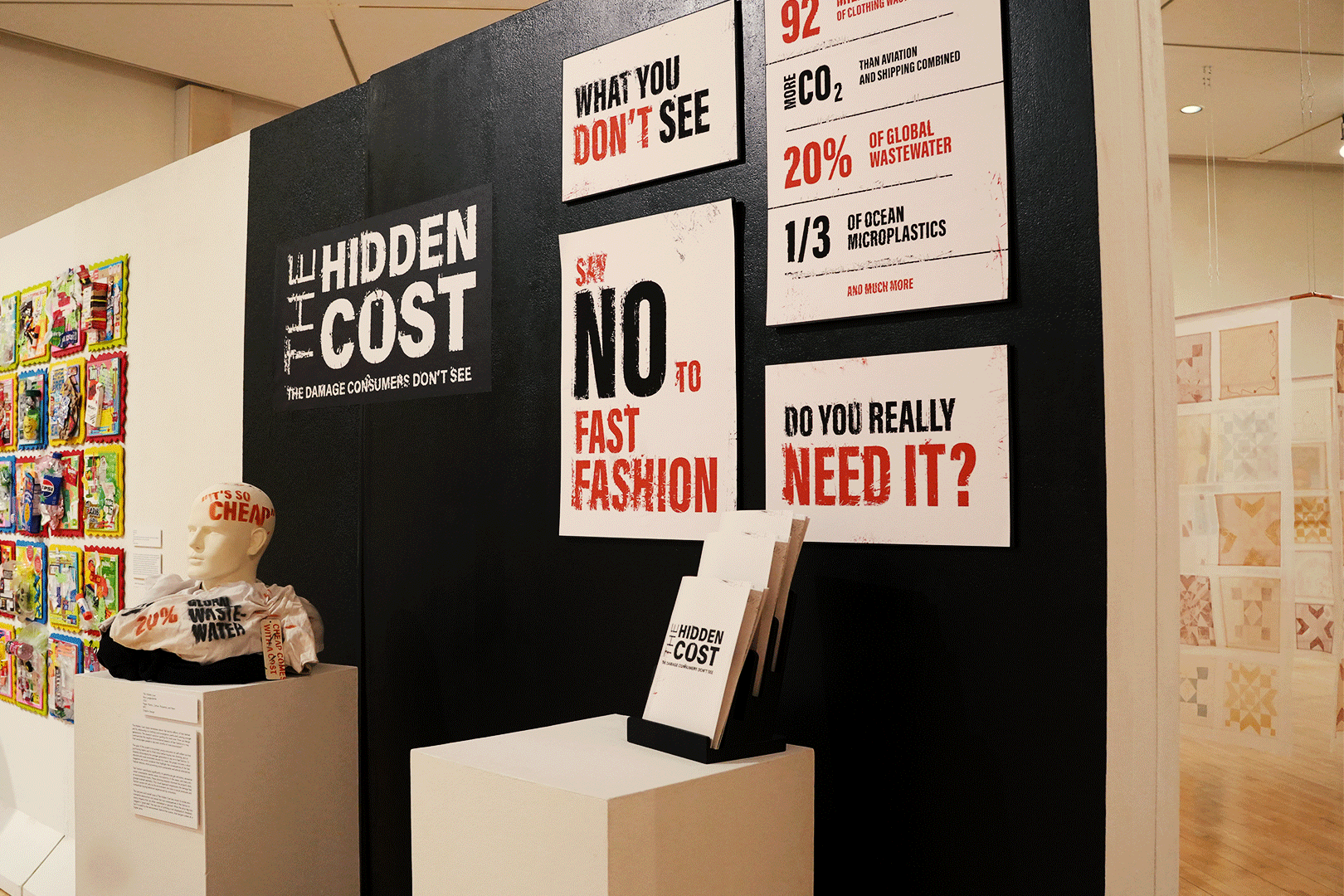
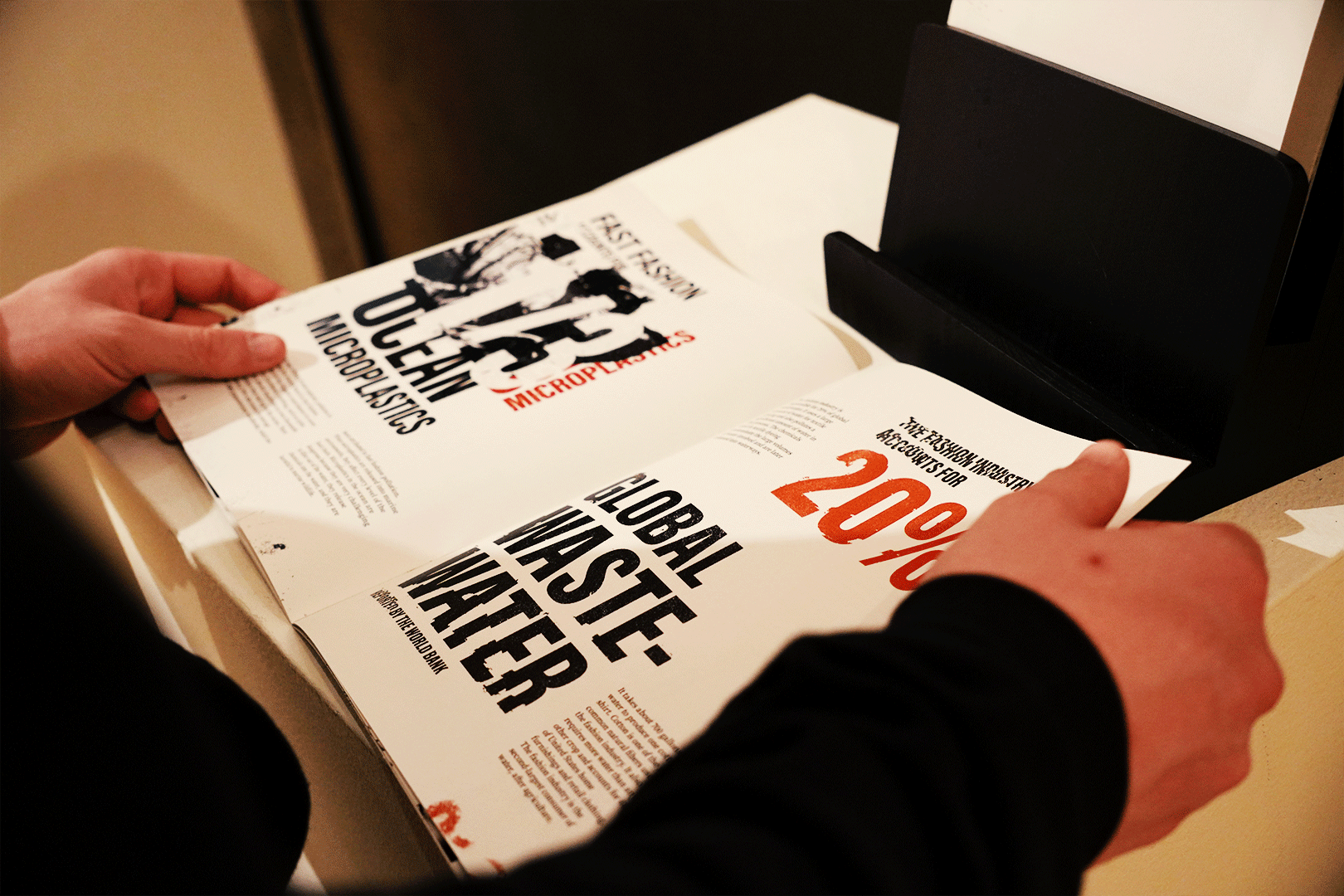
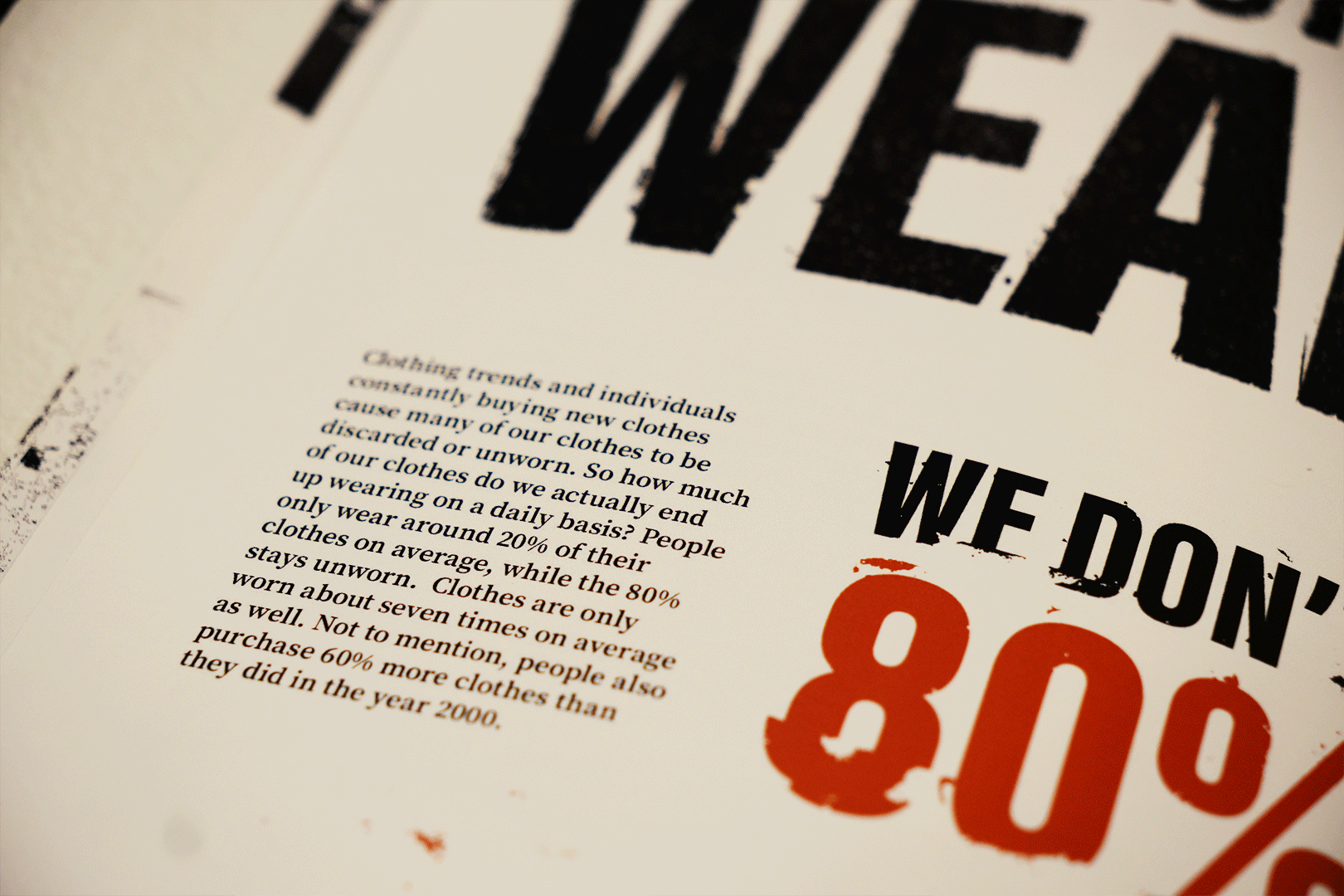
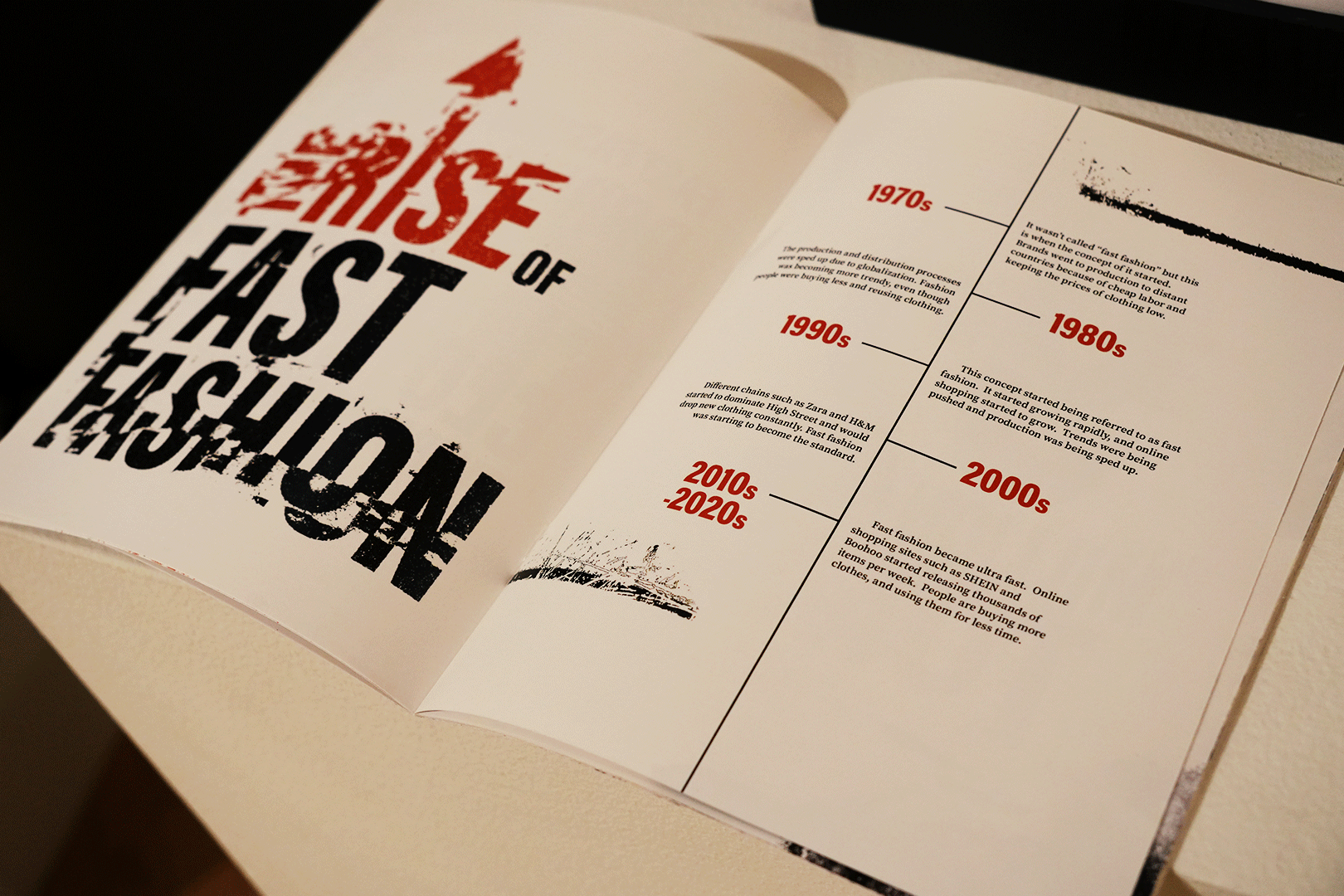
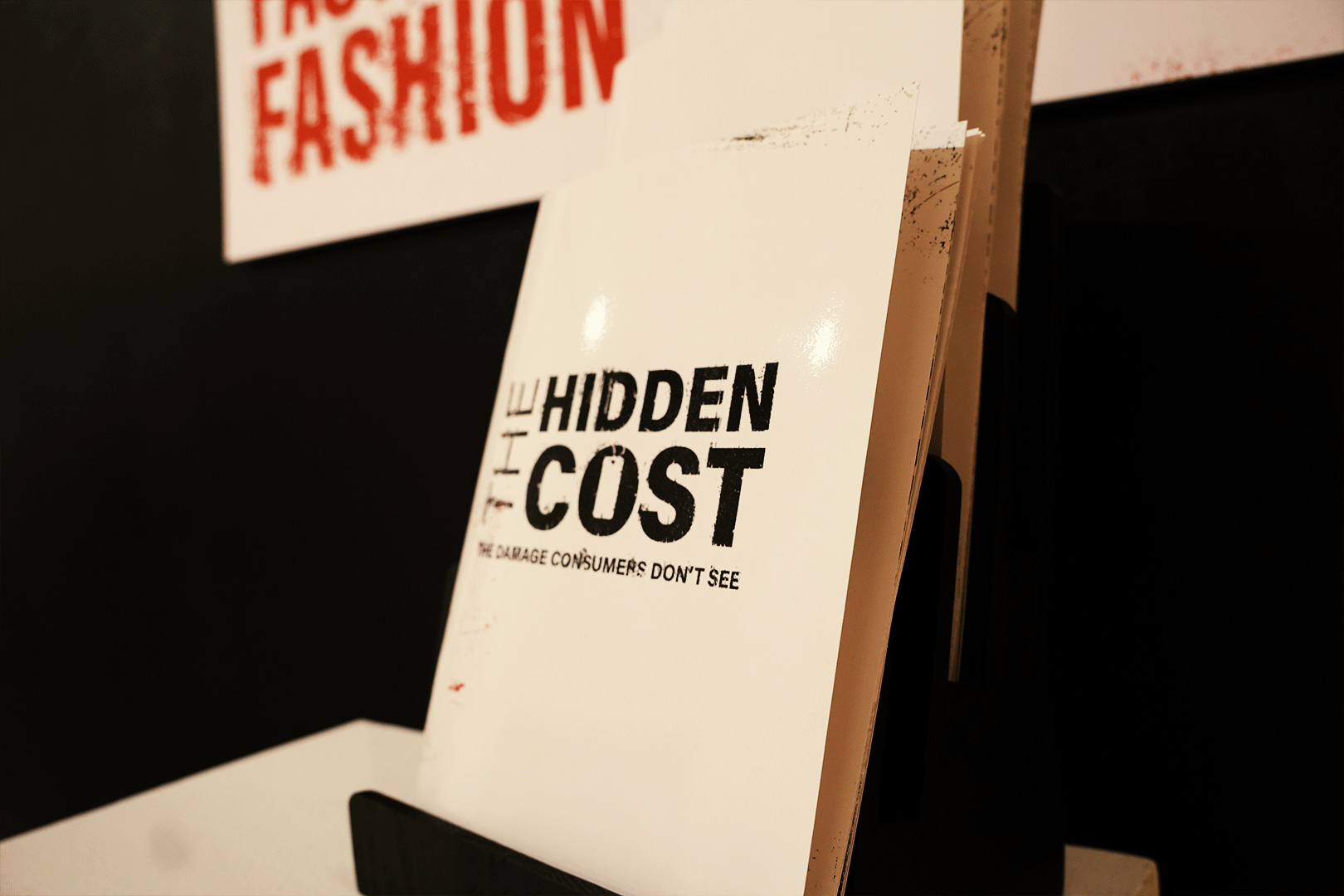
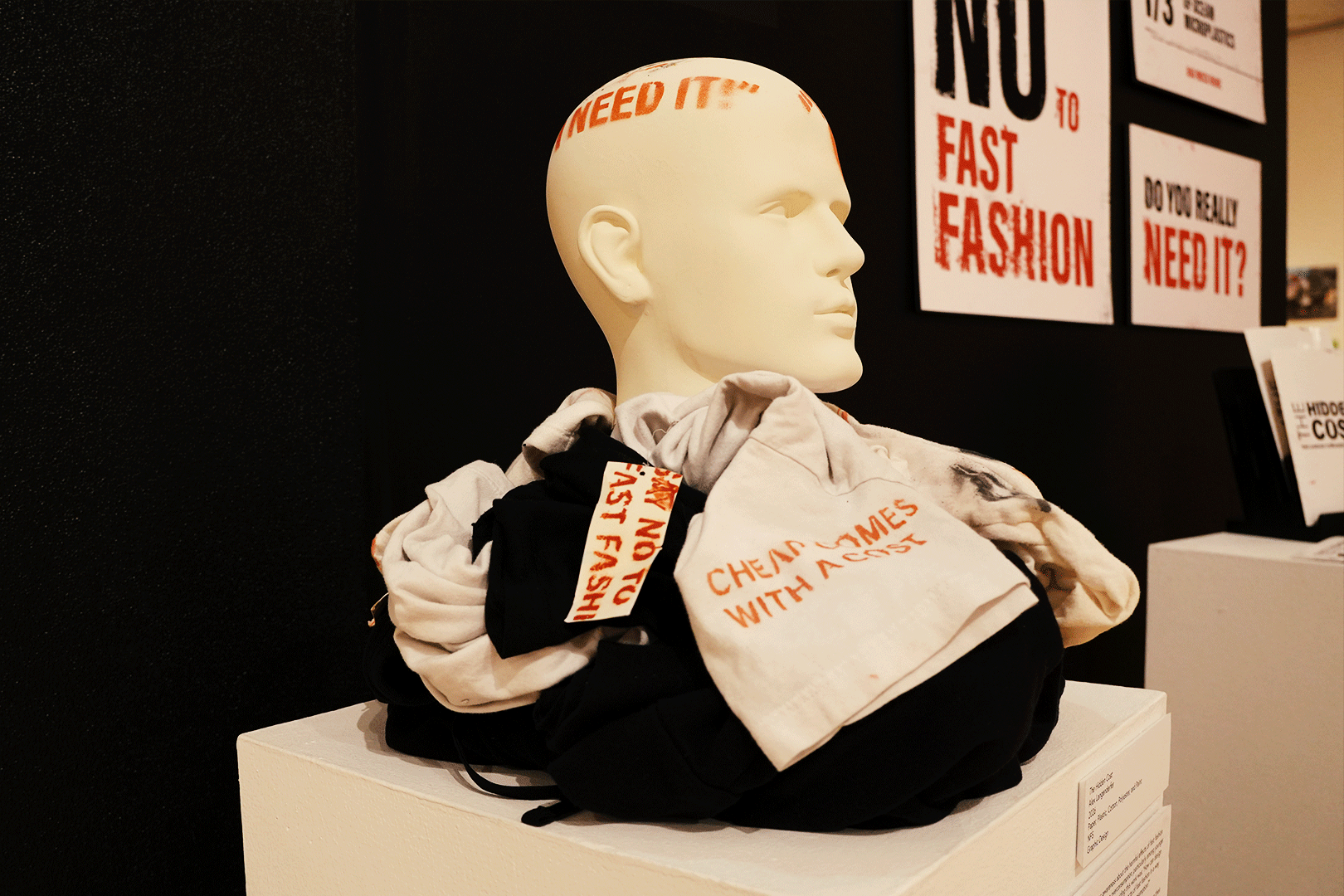
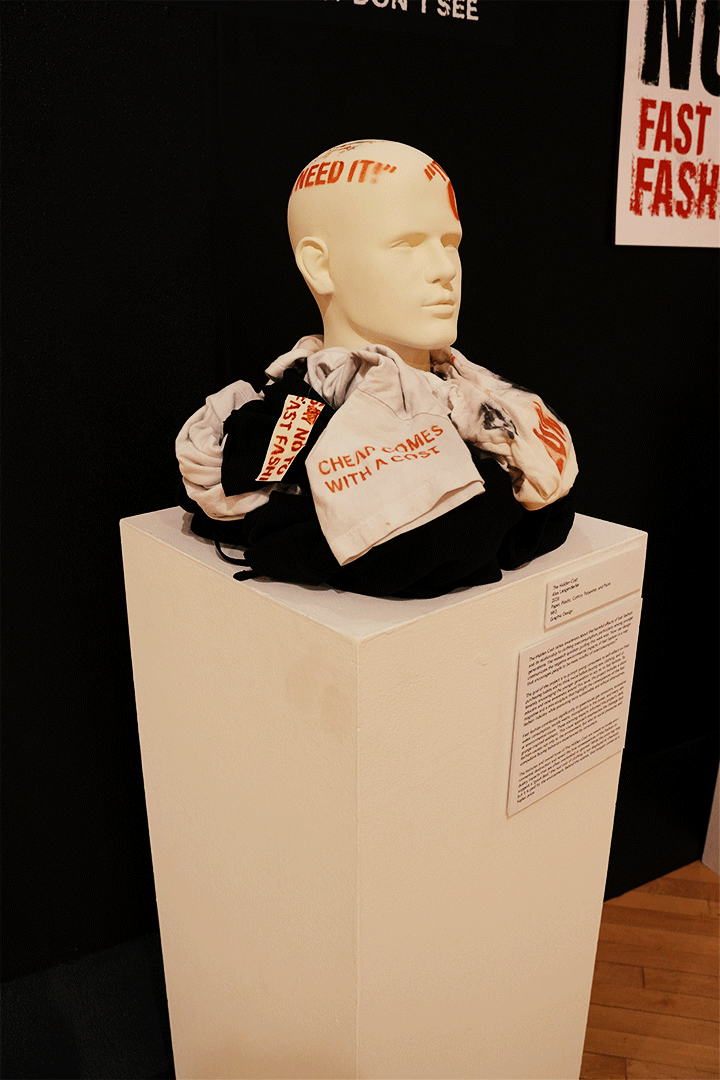
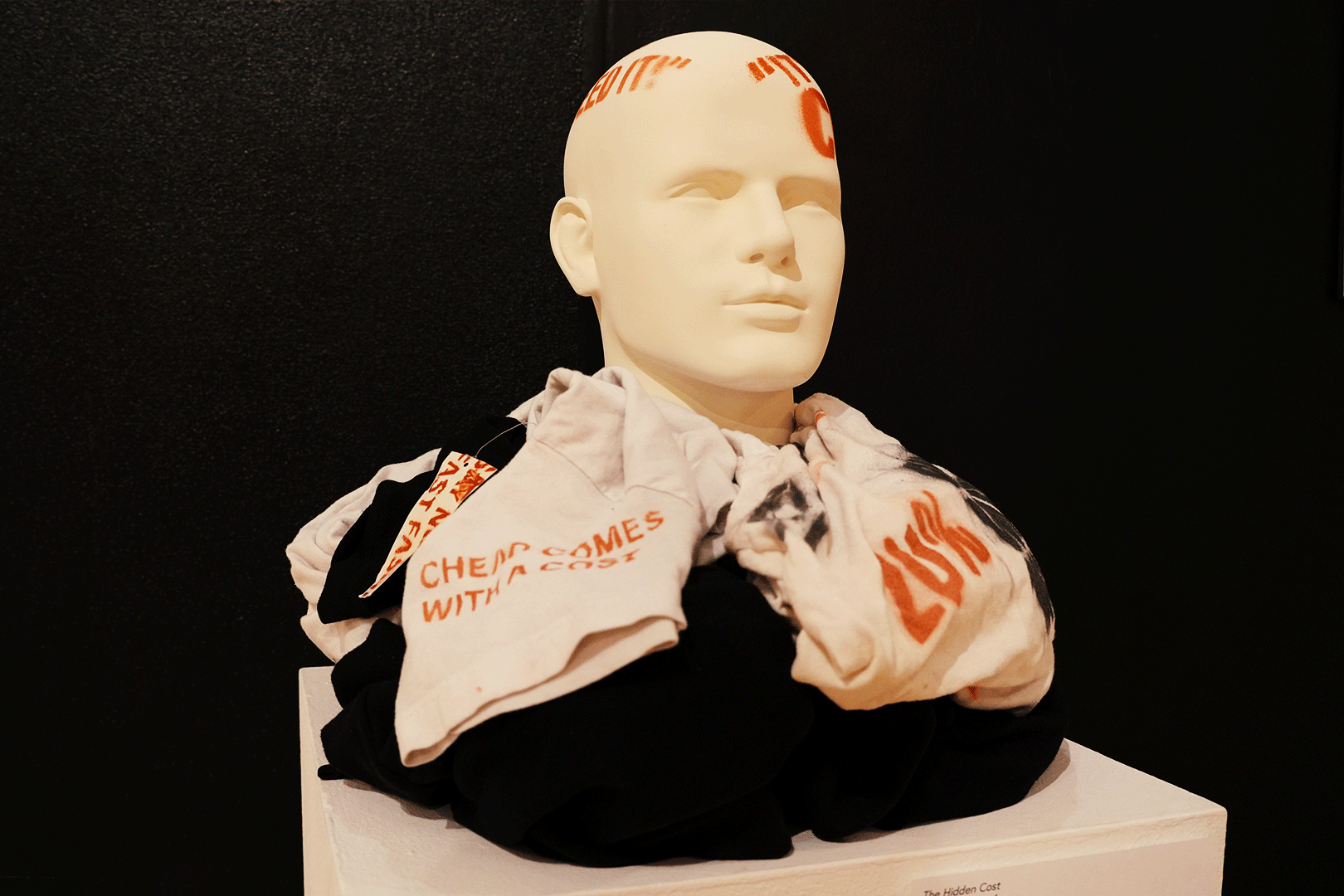
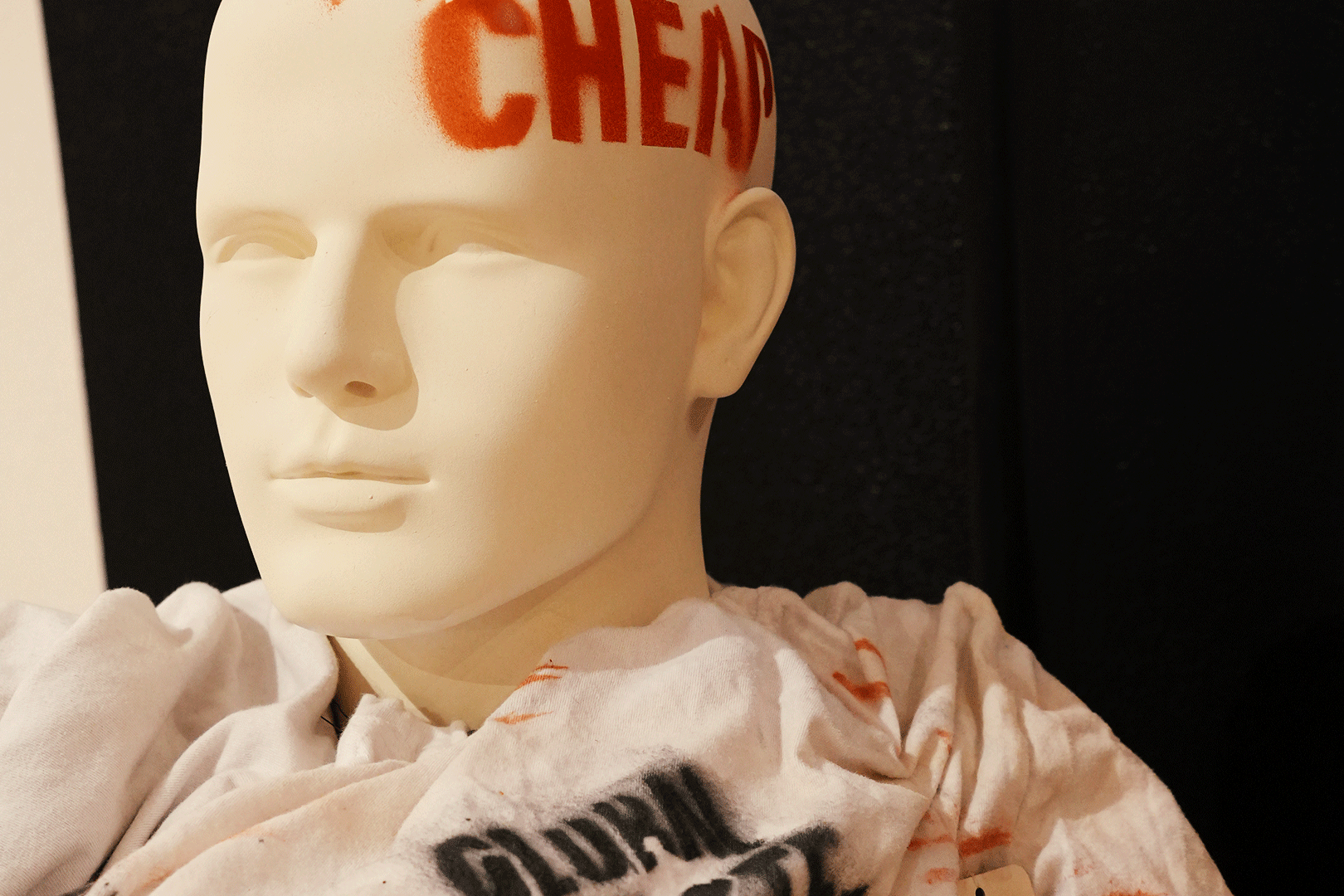
The Hidden Cost raises awareness about the harmful effects of fast fashion and its relationship to clothing overconsumption, particularly among younger generations. The research question guiding this work was: "How can design communicate the negative environmental impacts of fast fashion in a way that encourages people to be more mindful of overconsumption?”
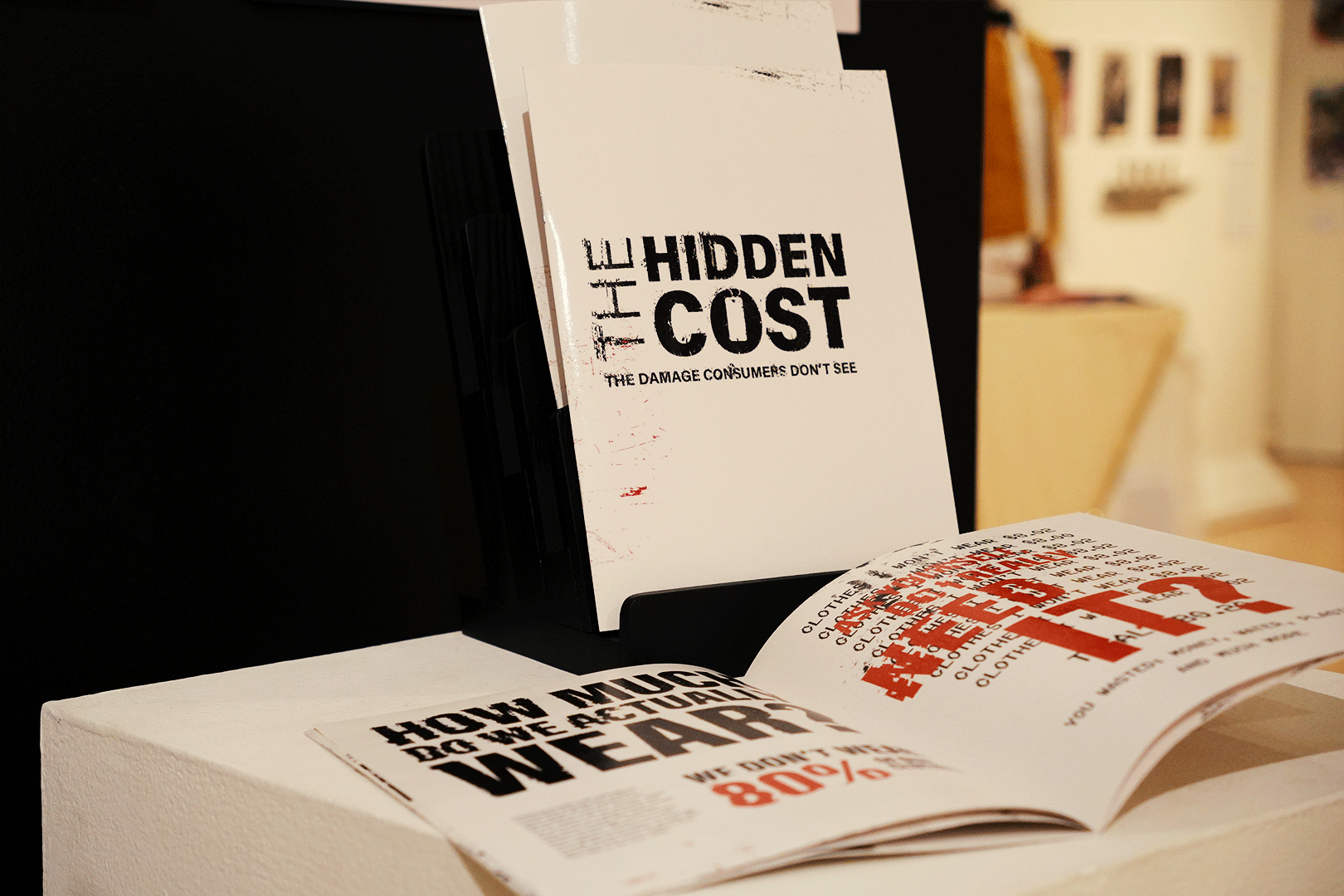
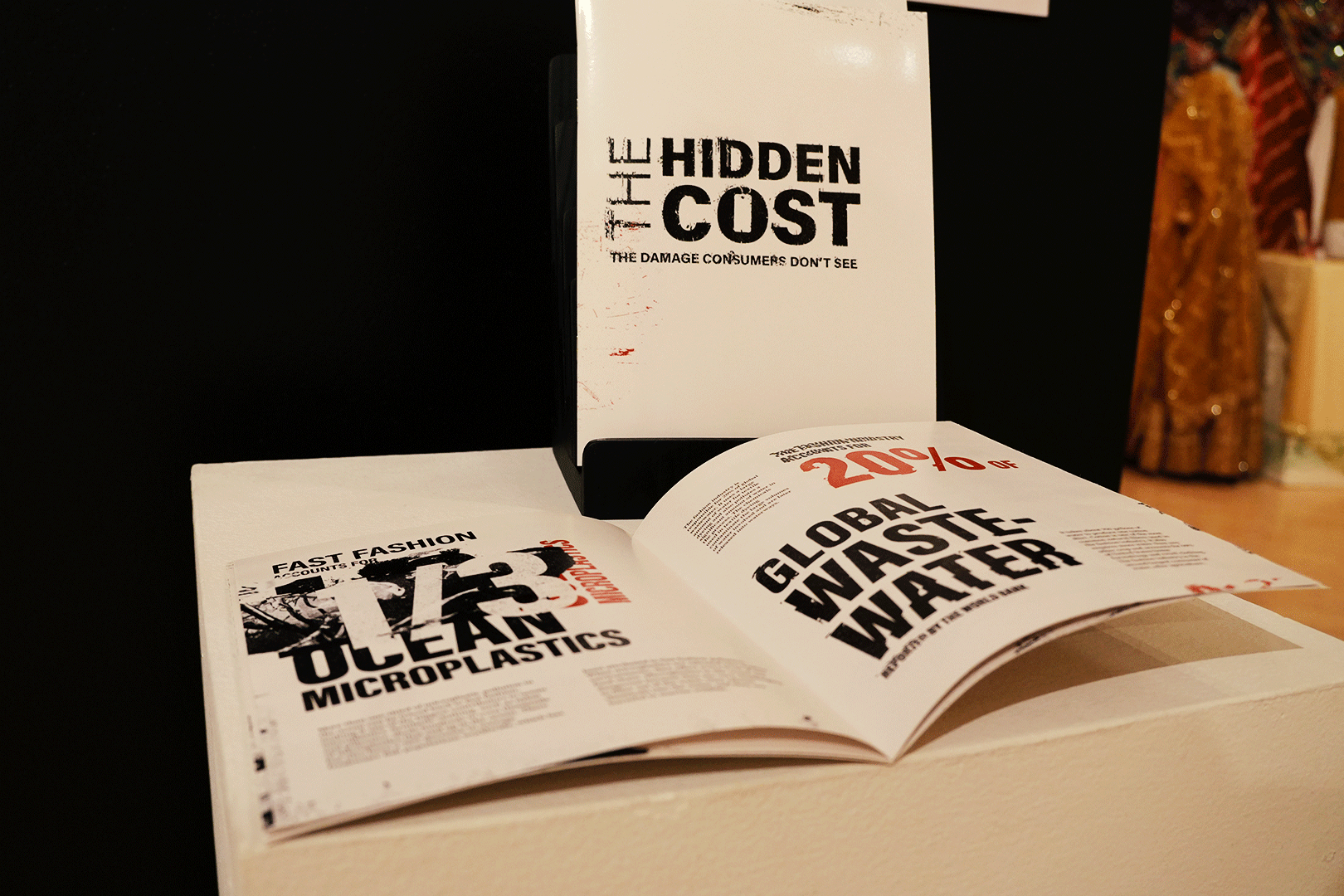
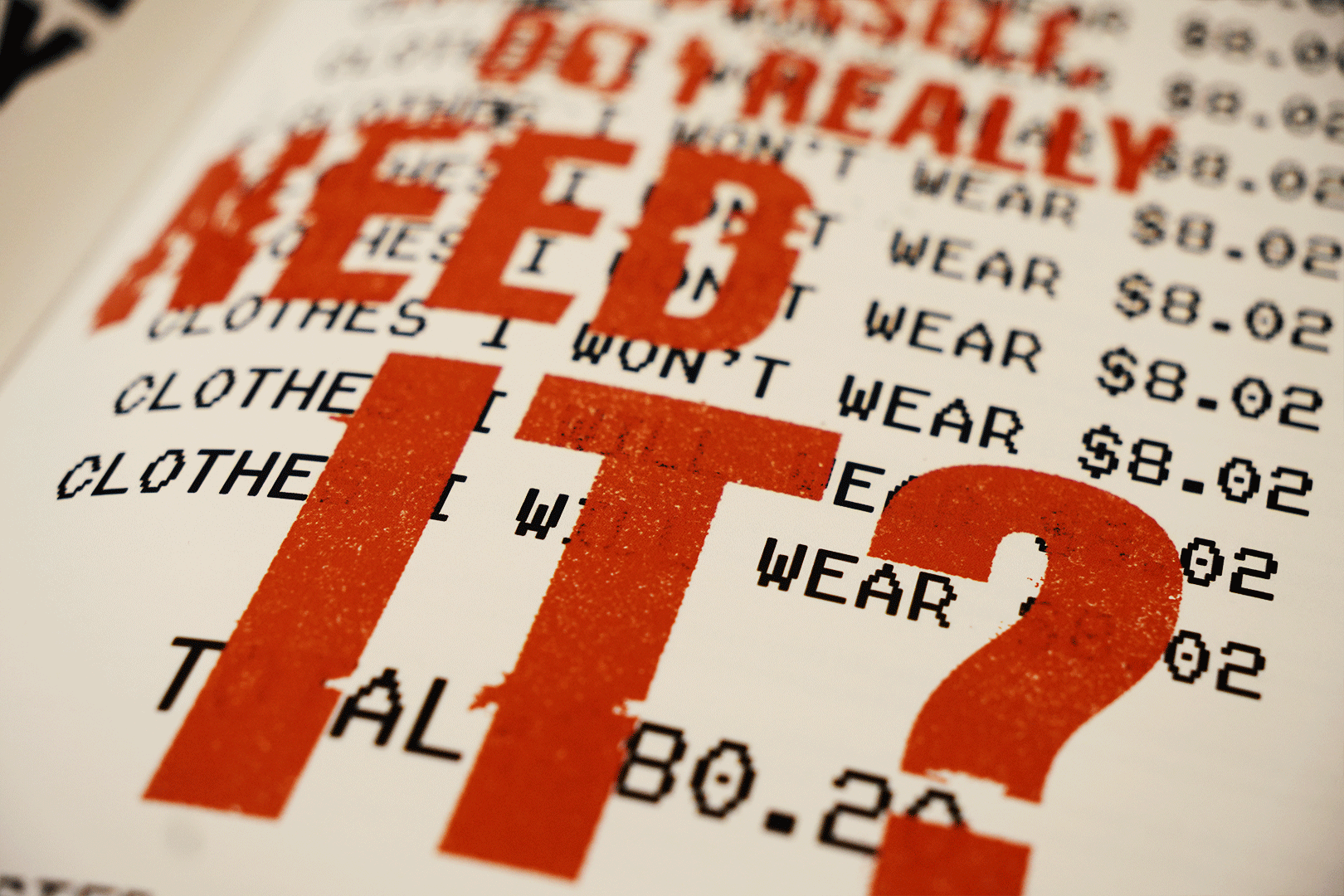
The goal of the project is to prompt young consumers to self-reflect on their purchasing habits and to think twice before buying new clothing, and ultimately encouraging the younger generation to say no to fast fashion. To educate and raise awareness around this issue, the project includes a short magazine and a mini sculpture that highlight the consequences of the fast fashion industry while promoting more sustainable and ethical alternatives.
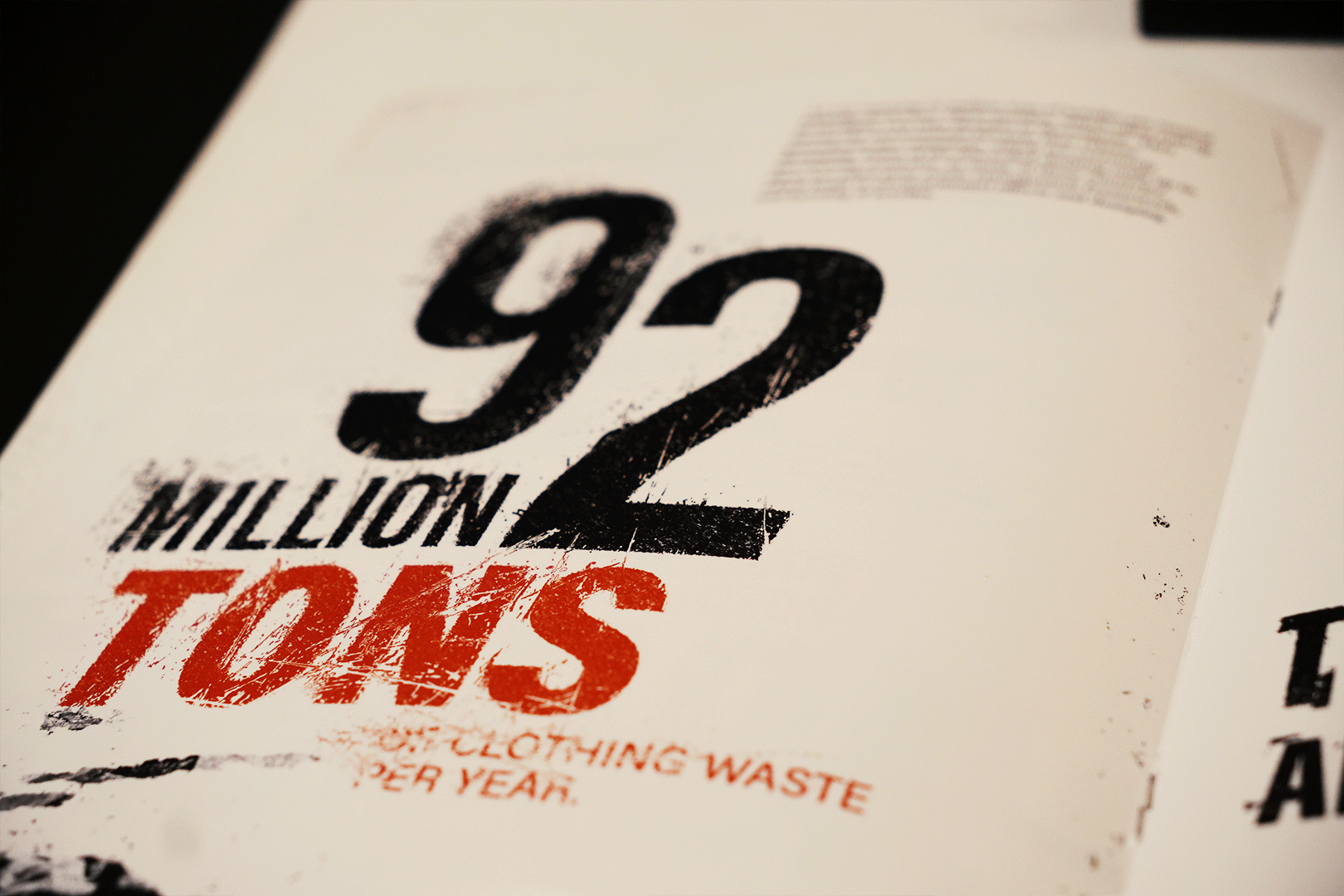
Fast fashion contributes significantly to greenhouse gas emissions, excessive water consumption, textile waste, microplastics in the ocean, and many other environmental issues. These alarming impacts informed the project’s dark, grunge-inspired aesthetic.
The Hidden Cost